
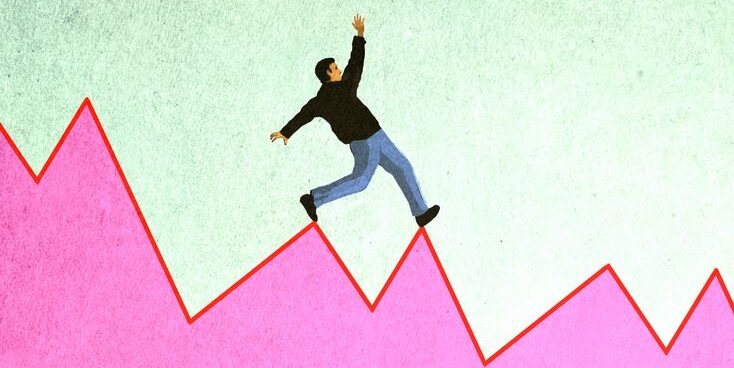
Brands don’t grow in a straight line; they evolve in cycles.
Understanding where your brand sits in its lifecycle is one of the most important strategic questions a team can ask, and one of the most consistently overlooked. Those who match their tactics to their brand lifecycle stage consistently outperform those stuck in a single mode of thinking.
Identify your life stage
Before you think about strategy, you need a clear read on reality.
Sales trends, market share, share of voice, retention and sentiment will tell you far more than instinct ever will.
Be ruthlessly honest with your findings. It’s easy to mistake a dip for decline, or maturity for stagnation. The right diagnosis is the foundation of everything that follows.
Stage 1: Introduction
At this stage, there’s one job: be seen.
People don’t trust what they don’t recognise, and recognition takes time. Five to seven touchpoints is the rough benchmark, so every interaction needs to pull its weight.
This is where positioning matters most. A clear point of difference isn’t a nice-to-have, it’s the foundation. Get it wrong early and it’s incredibly hard to recover.
Specificity is a competitive advantage. Trying to speak to everyone is the quickest way to connect with no one. Find your core audience, earn their trust, then scale.
Stage 2: Growth
Sales are climbing, more people are paying attention and competitors are starting to circle. The instinct here is to broaden appeal.
That’s where brands can come unstuck.
Chasing every opportunity risks diluting the very thing that made you stand out in the first place. The brands that sustain growth double down on what makes them distinctive, while building a deeper emotional connection with their audience.
Expand, but with intent. Not everything is worth saying yes to.
Stage 3: Maturity
Maturity can look like success. Sales are steady, awareness is high, and everything feels… fine.
That’s exactly where the risk lies.
Complacency is the biggest threat at this stage. Markets are crowded, competitors are well established and standing still quickly starts to feel like moving backwards. The focus shifts from awareness to relevance here, acquisition to retention.
Without some form of refresh, even strong brands can start to feel dated. That doesn’t mean ripping everything up – it means evolving within the ecosystem you’ve built.
Stage 4: Decline
This is the stage most brands avoid naming. But if sales are slipping and cultural relevance is fading, a short-term campaign won’t fix it – it will just cover it up.
The first step is understanding why.
Has behaviour changed? Has the brand drifted away from its audience? Or has it simply stopped evolving?
Repositioning is often the answer, but it needs to be meaningful. Old Spice and Lego didn’t just tweak messaging; they reimagined what the brand stood for while keeping enough of their heritage to stay credible.
Matching strategy to stage
The most common brand mistake is applying the wrong playbook to the wrong stage. Growth tactics at maturity, loyalty focus when repositioning is needed – each misalignment compounds over time.
Every stage has its own logic, priorities and definition of success. The discipline lies in accurately reading the stage and being willing to shift resources and approach accordingly.
Evolution is the advantage
The brands that last aren’t those that found the perfect strategy and held it. They’re the ones that kept reading the room, adapting as markets, audiences and competitors shifted around them. Brand evolution isn’t a risk, it’s the strategy.
At Brandnation, we guide brands at every stage of the lifecycle, from launch through growth, brand maturity and reinvention. Ready to adapt your strategy? Get in touch.

About the author
Simarin Tandon | Senior Digital Marketing Manager
Having worked with brands across the Beauty & Wellness, FMCG, FinTech, and Home & Lifestyle sectors, Simarin focuses on driving acquisition and growth, whilst managing the Digital team at brandnation.
A curious marketer, Simarin’s finger is always on the pulse when it comes to performance and digital updates across both paid and organic platforms.