
There’s a corner of the internet that doesn’t look like marketing, doesn’t feel like advertising, and consistently outperforms both. It lives in the comments section of a morning commute video, gets shared in group chats between colleagues and turns a stranger’s LinkedIn update into a reference point for how to navigate a pay review, dress for an office, or think about what a career is actually supposed to look like.
This is the world of the corporate influencer, and it’s one of the most commercially underused spaces in digital right now.
What is a corporate influencer?
The term gets used in two distinct ways, and understanding the difference matters for how brands deploy it.
The first is the employee advocate: a company’s own people, from junior team members to senior executives who build personal platforms that reflect their professional lives, share their employer’s culture and values, and create content that humanises what would otherwise be a logo or a press release.
The second, and the focus of this article, is the external creator who has built an audience around their professional life. The commute, the workwear, the career decisions, the realities of corporate culture.
On TikTok, the hashtag #careertok has reached nearly two billion views, while #corporate has accumulated over 11 billion. This is not a niche corner of the platform. It is a category with the reach of a mainstream entertainment vertical, built almost entirely on the appetite of a professional audience for content that reflects their working lives.

About the author
Simarin Tandon | Senior Digital Marketing Manager
Having worked with brands across the Beauty & Wellness, FMCG, FinTech, and Home & Lifestyle sectors, Simarin focuses on driving acquisition and growth, whilst managing the Digital team at brandnation.
A curious marketer, Simarin’s finger is always on the pulse when it comes to performance and digital updates across both paid and organic platforms.
Why corporate influencers carry a different kind of authority
The thing that separates a corporate influencer from a lifestyle creator is trust. Their audience follows them not because they have aspirational aesthetics or a product to sell, but because they speak from inside an experience their followers recognise.
The Edelman-LinkedIn 2025 B2B Thought Leadership Impact Report found that 95% of business decision-makers say thought leadership directly influences their purchasing decisions, and 64% say they trust it more than product sheets or standard case studies. Critically, nearly two-thirds of B2B decision-makers say they prefer thought leadership that is less formal and more human in tone. Corporate influencers are that human tone, made visible.
Take Isobel Lorna (@isobellorna_), who has built 1.4 million TikTok followers and 132.6 million likes on content that blends corporate fashion with career navigation, financial mindset and luxury lifestyle.
She founded Voir Social, co-hosts the Passenger Princess podcast, and has written two e-books on entering the corporate world. She isn’t just an influencer who wears nice clothes to the office. She’s a creator with genuine strategic intelligence about her audience, which is why brands like L’Oréal Paris have built campaigns around her, including the “Chief Gloss Officer” activation in 2025, a concept that worked precisely because it sat inside her existing world rather than interrupting it.
Lisa Ing Marinelli (@lisaingmarinelli) demonstrates what happens at the top end of the category. A London-based corporate lawyer, board adviser and Marie Claire contributing editor with 459,000 Instagram followers, she has built one of the most credible professional lifestyle audiences in the UK.
Her content blends power dressing and styling with the realities of a senior legal career, creating a following that includes exactly the kind of professional, financially independent, decision-making women that a significant number of premium brands struggle to reach authentically.
Martha Hwin (@marthahwin), a shipping professional based in London, has amassed 146,000 TikTok followers and 3.4 million likes through a consistent stream of corporate lifestyle and workwear content that makes the everyday realities of office life feel genuinely aspirational.
Lima Bronwynn (@limabronwynn), a law professional with 62,000 Instagram followers, has built her platform around the granular detail of corporate life that resonates most deeply with early and mid-career professionals.
What these creators share is not follower count – It’s credibility by proximity. Their audiences trust them because they are living the life they are talking about.
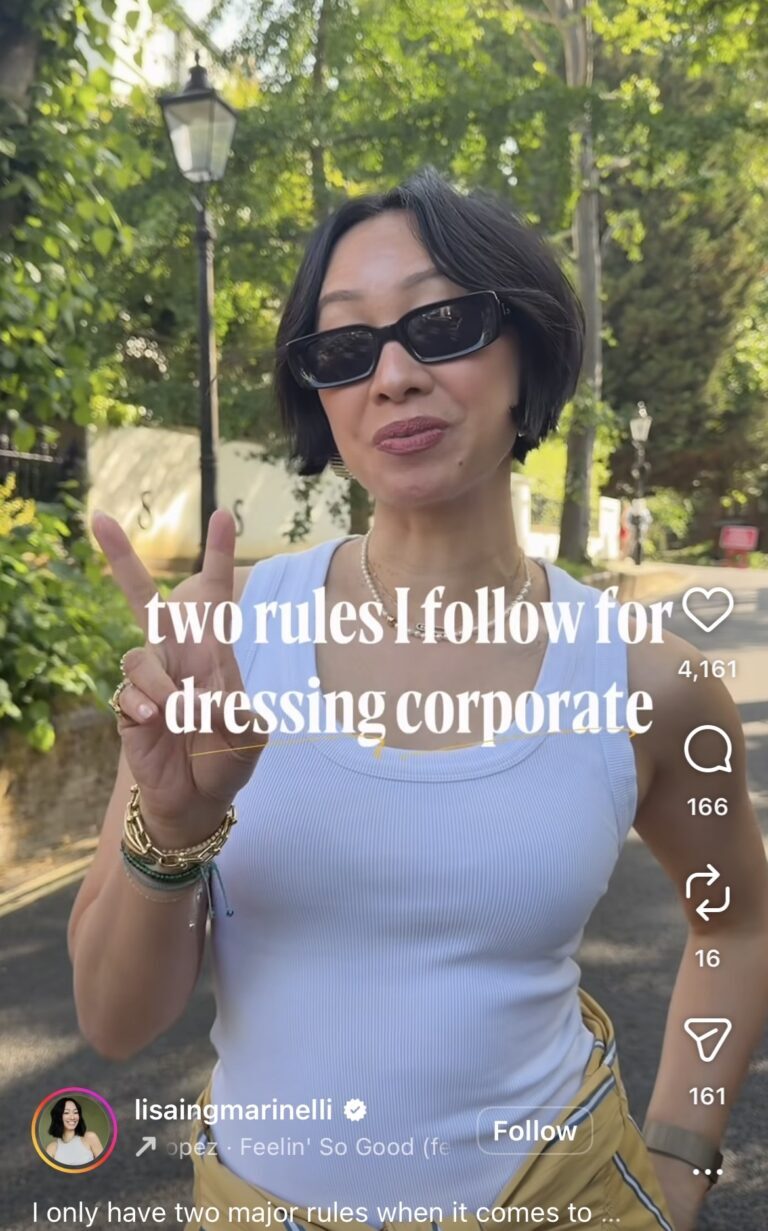
Lisa Ing Marinelli (@lisaingmarinelli) demonstrates what happens at the top end of the category. A London-based corporate lawyer, board adviser and Marie Claire contributing editor with 459,000 Instagram followers, she has built one of the most credible professional lifestyle audiences in the UK.
Her content blends power dressing and styling with the realities of a senior legal career, creating a following that includes exactly the kind of professional, financially independent, decision-making women that a significant number of premium brands struggle to reach authentically.
Martha Hwin (@marthahwin), a shipping professional based in London, has amassed 146,000 TikTok followers and 3.4 million likes through a consistent stream of corporate lifestyle and workwear content that makes the everyday realities of office life feel genuinely aspirational.
Lima Bronwynn (@limabronwynn), a law professional with 62,000 Instagram followers, has built her platform around the granular detail of corporate life that resonates most deeply with early and mid-career professionals.
What these creators share is not follower count – It’s credibility by proximity. Their audiences trust them because they are living the life they are talking about.
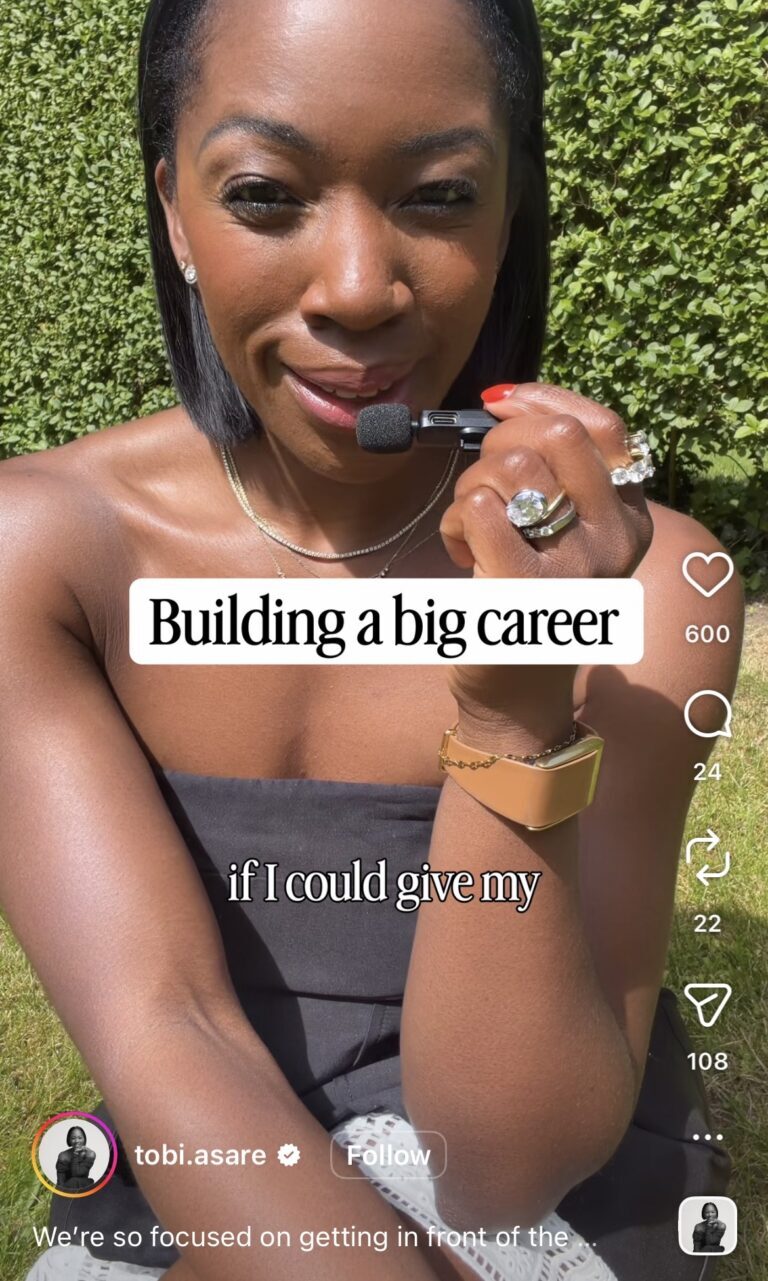
Tobi Asare (@tobi.asare) occupies different but equally powerful territory. Founder of My Bump Pay, board executive, author of The Blend, and a speaker who has worked with the Financial Times, Meta and DCMS, she has built her 28,000 Instagram following around one of the most commercially underserved intersections in professional content: working motherhood. Her audience doesn’t just trust her opinions, they make financial and career decisions based on them.
What corporate influencers are actually for
The most common mistake brands make with corporate influencers is briefing them like any other creator: product placement, brand mention, link in bio. That misses the structural reason this category works.
More than 75% of decision-makers and C-suite executives say a single piece of thought leadership content led them to research a product or service they had not previously considered.
Corporate influencer content functions as thought leadership at scale. When a creator with an established professional identity integrates a brand into their world, it carries the weight of a recommendation from a peer, not the format of an advertisement.
Tobi Asare (@tobi.asare) occupies different but equally powerful territory. Founder of My Bump Pay, board executive, author of The Blend, and a speaker who has worked with the Financial Times, Meta and DCMS, she has built her 28,000 Instagram following around one of the most commercially underserved intersections in professional content: working motherhood. Her audience doesn’t just trust her opinions, they make financial and career decisions based on them.
What corporate influencers are actually for
The most common mistake brands make with corporate influencers is briefing them like any other creator: product placement, brand mention, link in bio. That misses the structural reason this category works.
More than 75% of decision-makers and C-suite executives say a single piece of thought leadership content led them to research a product or service they had not previously considered.
Corporate influencer content functions as thought leadership at scale. When a creator with an established professional identity integrates a brand into their world, it carries the weight of a recommendation from a peer, not the format of an advertisement.
LinkedIn posts featuring industry creators generated 2.3x more engagement than traditional brand-published content, reflecting the growing importance of expert voices in B2B communication, where audiences respond more strongly to insights shared by trusted professionals. The same principle holds across TikTok and Instagram. The corporate influencer’s personal brand is the frame through which their audience receives everything else.
This has specific strategic implications. Corporate influencers are most effective when the partnership is built around their expertise and context rather than their reach.
A fashion brand working with Martha Hwin is not buying 146,000 impressions – it’s buying placement inside a trusted editorial world where workwear decisions are made every day.
How brands should work with corporate influencers
The brands getting the most from this category share a consistent set of approaches.
- They prioritise relevance over reach: A creator with 30,000 highly engaged followers in the right professional niche will outperform a macro creator with a diffused audience almost every time.
- They invest in long-term relationships rather than one-off campaigns: B2B brands are moving from one-off campaigns toward long-term collaborations to maintain relationships and drive long-term pipeline outcomes.
- They give creators genuine creative latitude: The L’Oréal Paris “Chief Gloss Officer” campaign with Isobel Lorna worked because the concept was built around her identity, not imposed on it. The brief came to meet her world rather than asking her world to carry the brief.
- They think seriously about platform lift: Lisa Ing Marinelli’s audience lives on Instagram and responds to editorial, aspirational content. Isobel Lorna and Martha Hwin command TikTok with short-form video that rewards consistency and authenticity. Lima Bronwynn and Tobi Asare speak to communities that value insight and lived experience over aesthetics. Each creator’s platform isn’t interchangeable with the others, and the most effective briefs are built with that specificity in mind.
The commercial case is harder to ignore than ever
94% of B2B marketers say their influencer marketing delivers positive results, whilst the average ROI for B2B influencer programmes sits at 520%. Companies with strong thought leadership programmes report 23% shorter sales cycles due to pre-established trust and credibility.
These aren’t abstract numbers. They describe what happens when a brand earns the trust of a professional audience before it asks them to do something. Corporate influencers are one of the most direct routes to that outcome, because they have already done the trust-building work.
The brands that understand this aren’t asking how to use corporate influencers as a channel. They’re asking which creators’ worlds they’ve genuinely earned the right to be part of, and what they can bring to those worlds that makes them worth entering.
Want to build an influencer strategy that reaches professional audiences in the right context, with the right creators?
At Brandnation, we’ve spent over two decades building influencer partnerships that drive real business outcomes, from awareness-building influencer campaigns to performance-led affiliate programmes that convert. Our influencer marketing studio, Sphere™, is built to bridge exactly this gap, helping brands combine creative storytelling with measurable, trackable sales.