One minute your feed is full of Labubus. The next, everyone is recreating the same TikTok sound and Ryanair has somehow already made a joke about it.
Welcome to the internet.
Trends move fast and, understandably, brands want in. Get trend-jacking right and a brand feels relevant, culturally switched-on and part of the conversation. Get it wrong and you’ve turned up to the party just as everyone else is putting their coat on.
So what separates the brands that get it right from the ones that don’t?
Key takeaways
-
Relevance is the whole game: Strong trend-jacking takes something audiences already recognise and adds a perspective only your brand could bring.
-
Some trends are best left alone: If your audience doesn’t care, the fit isn’t natural or you have nothing to add, sitting it out is the smarter move.
-
Speed needs a system: Brands that react well know their voice well enough to make quick decisions without endless rounds of feedback.
-
The product can be the punchline: The McDonald’s “bite war” worked because Burger King and Wendy’s turned a meme into a product demo.
-
Trend-jacking comes in many forms: KitKat leaned into its own news story, the NFL adapted a viral meme and Greenpeace used pop culture to carry a campaigning message.
What is trend-jacking?
Trend-jacking is exactly what it sounds like: taking a cultural moment, meme, sound, format or conversation that’s already gaining momentum and finding a relevant way for your brand to join in.

About the author
Niamh Conneely | Junior Account Manager
With experience across beauty, lifestyle, and tech, working with both B2B and B2C brands, Niamh is passionate about all things social and loves turning strategy into engaging campaigns.
The important word there is relevant.
Squeezing your product into whatever happens to be trending on TikTok rarely works. The strongest trend-jacking takes something audiences already recognise and adds a perspective that could only really come from your brand.
Think of Ryanair turning cultural moments into jokes through its deliberately chaotic social personality, or Duolingo dropping its equally chaotic owl into conversations that have very little to do with learning Spanish.
Neither looks like a brand desperately trying to be down with the kids. Their reactions land because they fit the personality audiences already expect from them.
You don't need to join every trend
When something starts appearing everywhere, the temptation is to ask, “What are we doing for this?” Sometimes the answer should be nothing.
Plenty of memes are better off without your logo, plenty of TikTok sounds work fine without your product, and plenty of cultural moments never needed a brand response.
Before jumping in, ask three questions:
- Does our audience care?
Does it make sense for our brand?
Can we genuinely add something? - If the connection takes several slides of a brainstorm deck to explain, it probably isn’t the one.
- Context matters too. Trends can carry meanings, references and communities that aren’t obvious at first glance. Jump in without understanding where something came from and a quick social post can turn into a much bigger problem.
Speed matters, and so does having something to say
You do still need to move. There’s little point spending two weeks crafting the perfect response to a meme everyone stopped sharing ten days ago.
Social moves at social speed. Pulse argues that brands which repeatedly achieve viral reach tend to have systems in place to spot trends early and react quickly, instead of treating every reactive post like a miniature ad campaign.
The approval process can stay. What helps is knowing your brand voice well enough that teams understand where they can play, what’s off limits and how quickly decisions can be made.
By the time a trend-jack has been through fourteen rounds of feedback, the internet has usually moved on.
Put your brand in it
This is where trend-jacking becomes a creative skill.
In March 2026, McDonald’s CEO Chris Kempczinski unexpectedly found himself at the centre of a social media moment after a video of him taste-testing the new Big Arch burger went viral. His small bite, paired with some distinctly corporate language, quickly became meme material.
Burger King and Wendy’s saw their opportunity.
Burger King president Tom Curtis appeared in a video taking a considerably bigger bite of a Whopper, while Wendy’s US president Pete Suerken responded with a Baconator and a characteristically cheeky dig at its rival. Suddenly, there was a burger “bite war”.
Speed helped, and the real strength was that the joke doubled as a product demo. Both brands could join the conversation, show off the thing they actually sell and lean into the competitive personalities audiences already associate with fast-food social media.
Competitive trend-jacking can be brilliant when the joke feels playful and the product naturally belongs in the conversation. Push it too far, though, and playful rivalry can quickly turn consumers off.
More broadly, if every brand is using the same audio, template or joke, what makes yours worth watching?
It might be an unexpected product connection, a creator who can give the trend a fresh spin or the particular humour your community already knows you for. The trend supplies the format. Your brand still has to supply the idea.
The real art is knowing where you belong
Good trend-jacking has very little to do with being first to discover a trending sound.
It comes from understanding culture well enough to spot the moments where your brand has permission to take part, and having the confidence to leave the rest alone.
The rules are simple:
- Listen to what your audience is talking about
- Understand why the conversation is happening
- Find the connection to your brand
- Move quickly enough to make it count
Three of the best trend-jacking examples
KitKat turns a real-life chocolate heist into viral marketing
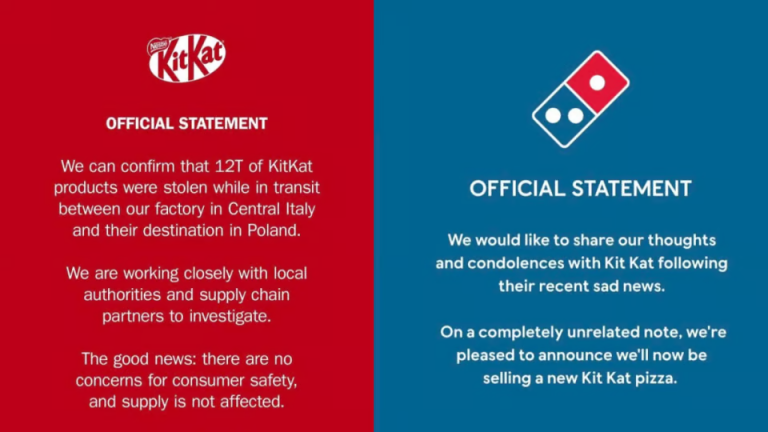
In March 2026, 413,793 KitKat bars disappeared while being transported from Italy to Poland. It was a serious case of cargo theft, but the sheer scale and slightly surreal nature of the story meant people were already talking about it.
Nestlé went further than a corporate statement and leaned into the conversation. KitKat launched an online tracker that let people enter the batch code from their wrapper to find out whether their chocolate had come from the stolen shipment. Domino’s, KFC and Ryanair soon joined the joke.
People paid attention. Fortune reported that more than 2.2 million people engaged with the tracker, while KitKat’s daily social video views jumped from roughly one million to 29 million.
The lesson? Sometimes the conversation is already about your brand. When that happens, a quick, creative piece of real-time marketing can travel much further than a traditional press release.
The NFL makes a viral meme its own
One of the simplest forms of trend-jacking is taking an existing social format and adapting it for your audience.
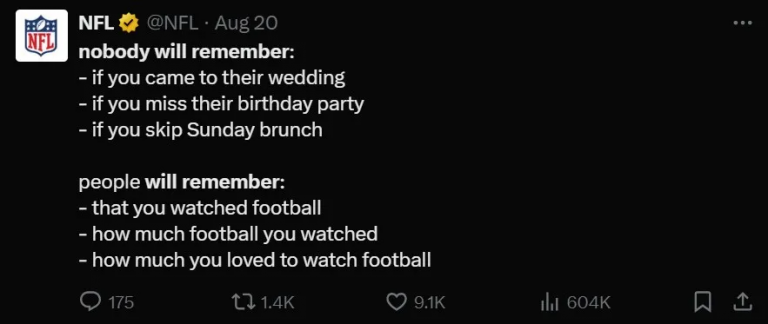
The “Nobody will remember” meme is a good example. The format usually starts with lines about how nobody will remember your salary, how busy you were or how many hours you worked, before switching to the thing people apparently will remember.
When the format resurfaced in 2024, sports brands quickly made it their own. The NFL swapped life advice for a far more important message: people will remember how much football you watched and how much you loved watching it.
The NFL kept the trend exactly as it was and simply translated it into something instantly recognisable to its community. It’s a useful reminder that trend-jacking can work without a huge creative concept. If the format already works, the smartest move is often finding the most natural brand connection.
Greenpeace uses trend-jacking to put purpose into the conversation
Trend-jacking isn’t reserved for entertainment and consumer brands either.
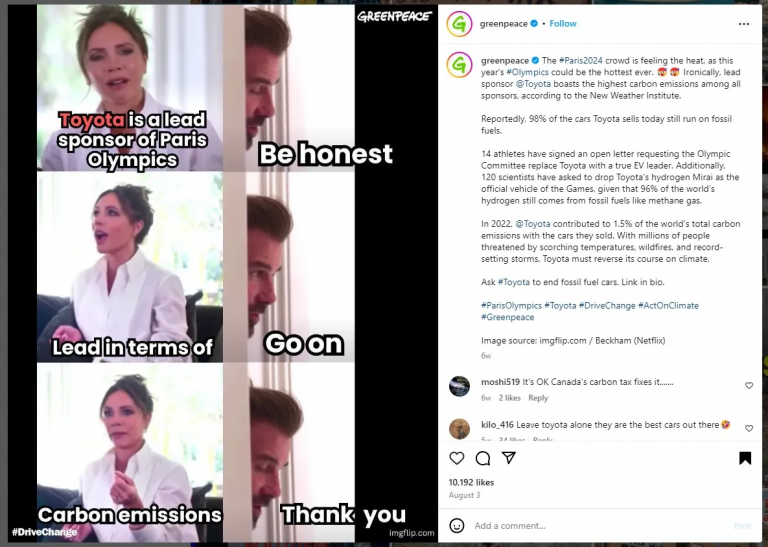
After Netflix’s Beckham documentary gave the internet the now-famous “be honest” exchange between David and Victoria Beckham, the moment quickly became a meme format.
Greenpeace picked it up and connected an instantly recognisable piece of pop culture to its wider campaigning message.
It shows another side of trend-jacking: the trend can act as the hook, while the brand’s purpose provides the substance.
Finding the angle that's unmistakably yours
Whether it’s KitKat reacting to unexpected brand news, the NFL tapping into a viral meme or Greenpeace using pop culture to carry a bigger message, the principle is the same.
Successful trend-jacking means recognising the right cultural moment, understanding why people care and finding the angle that feels unmistakably yours. That takes constant monitoring of social trends, the agility to move quickly when the opportunity is right and, crucially, the judgement to know when to stay quiet.
Great social media marketing comes from understanding your audience, your brand voice and the moments where you have a genuine reason to join the conversation. That’s exactly what our social media team helps brands do, from spotting the trends worth jumping on to building the reactive processes that get great ideas live while the moment still matters. If you’re ready to be the brand everyone else is reacting to, get in touch.
FAQs
Trend-jacking is when a brand takes a cultural moment, meme, sound, format or conversation that’s already gaining momentum and finds a relevant way to join in. The best examples add a perspective that could only come from that brand.
Ask three questions: does your audience care, does it make sense for your brand and can you genuinely add something? It’s also worth understanding where the trend came from, as some carry meanings or community context that aren’t obvious at first.
Burger King and Wendy’s turned the McDonald’s “bite war” into a product demo, KitKat launched a batch-code tracker after 413,793 bars were stolen, the NFL adapted the “Nobody will remember” meme for football fans and Greenpeace used the Beckhams’ “be honest” moment to carry a campaigning message.