For years, the sponsored post was the whole deal. Now the strongest creator partnerships start with an experience, and the post is how everyone else finds out about it.
That shift makes more sense through an idea Joseph Pine and James Gilmore introduced almost three decades ago. In their 1998 Harvard Business Review article, Welcome to the Experience Economy, they argued that economic value moves from commodities to goods, then to services and ultimately to experiences, as each layer becomes harder to differentiate.
In 2026, Pine took the argument a step further. The Transformation Economy proposes that memorable experiences are no longer the end point. The next source of value is helping customers achieve an aspiration or make a meaningful change.
Influencer marketing is moving along the same curve. Content is abundant. Experience is harder to copy. Transformation is harder still.
Key takeaways
-
Value moves up the curve as markets saturate: Pine and Gilmore’s Experience Economy shows how businesses shift from commodities and goods towards services and experiences once each layer becomes easy to copy.
-
Content has become a commodity: Production is cheaper and faster than ever, so volume alone offers little competitive advantage.
-
Experience-led influencer marketing is built on participation: The focus moves from commissioning assets to creating something creators and audiences can take part in.
-
Creator freedom builds trust: Partnerships perform better when creators have enough involvement to interpret an experience for their own community.
-
Transformation is the next frontier: The most valuable creator partnerships will help audiences achieve something, with content as the record of it.
The experience economy in brief

About the author
Simarin Tandon | Junior Digital Account Director
Having worked with brands across the Beauty & Wellness, FMCG, FinTech, and Home & Lifestyle sectors, Simarin focuses on driving acquisition and growth, whilst managing the Digital team at brandnation.
A curious marketer, Simarin’s finger is always on the pulse when it comes to performance and digital updates across both paid and organic platforms.
The original argument is built around a progression of economic value.
Commodities are extracted. Goods are made. Services are delivered. Experiences are staged.
Earlier forms don’t disappear. As one layer becomes easier to copy, businesses simply look for differentiation at the next one up.
Pine’s 2026 follow-up adds a fifth layer: transformations. In his framework, businesses create the greatest value when they help people achieve an aspiration and become different in some meaningful way.
For marketing leaders, that’s a useful lens on where creator marketing is heading.
Content has become a commodity
There has never been more content.
Every major platform has a mature creator ecosystem. Production tools are cheaper, editing is faster and formats jump between TikTok, Instagram and YouTube in days. Generative AI now makes it possible to churn out variations at even greater speed.
When everyone can make more content, making more content stops being much of an advantage.
Epidemic Sound found that 75% of creators surveyed believe human-created content is becoming a premium in the AI era. It also found that 41% want to build a sustainable independent business or grow into a media brand or creator studio.
Content still matters. What has changed is where the value sits. It has moved towards the things that are hardest to replace: the person, the relationship, the access and the experience behind the post.
Where influencer marketing sits on the curve now
Influencer marketing began largely as distribution, then handed creators more creative responsibility. The next step is participation.
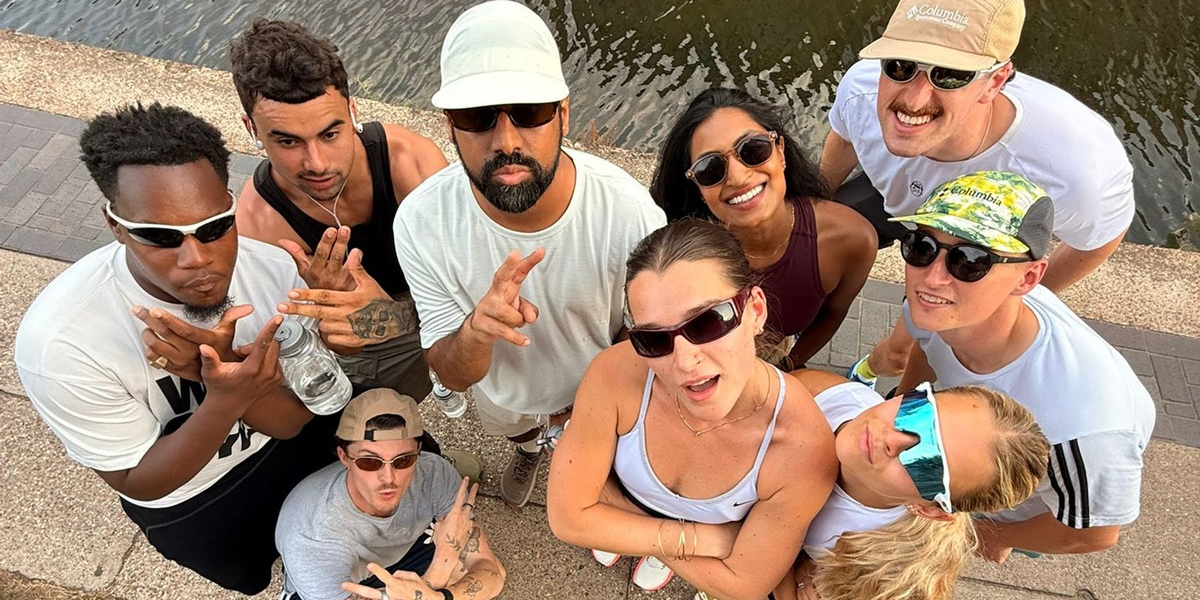
A creator might host a run, lead a workshop, curate a dinner, take a community behind the scenes or shape an event around what their audience genuinely cares about.
That’s where experiential marketing and creators start to create a different kind of value. The output might still be a Reel or a TikTok. The post simply becomes evidence of something that actually happened.
It also reframes the familiar debate between brand experiences and advertising. Advertising tells an audience what a brand wants to say. An experience gives people something to interpret for themselves.
The creator relationship matters more than ever
An experience can’t be fully scripted without turning into a performance.
Creators understand the references, rituals and expectations of their own communities. Bring them in early enough and they can shape an idea around what people will actually want to do, which is often very different from what looks good on an event deck.
Creator-led experiential campaigns ask more of the relationship. A creator might be host, participant, storyteller and distribution partner all at once, so they need a real say in how the experience works.
How to apply experience economy thinking
Start with the value you want to create. The content follows from that.
If the objective is product trial, what would make the trial genuinely useful or memorable? If it’s community, what would give people a reason to meet? If it’s education, what could the creator help the audience learn or do?
Then decide what role the creator should play. Some creators should host. Some should teach. Some should document. The format should follow the job.
Views and engagement still matter. They just belong alongside participation, sentiment, organic content yield, direct response and the quality of the creator relationship.
What the Transformation Economy adds
Pine’s 2026 argument moves beyond memorable moments.
The Transformation Economy is built around helping customers achieve their aspirations. Pine describes transformations as outcomes created through experiences over time, lasting long after any single event ends.
That opens a bigger question for influencer marketing. A running creator could help a sports brand turn interest into a running habit. A beauty creator could help a community build confidence with a new technique. The value lies in what changes afterwards.
The best post and the most valuable partnership aren’t always the same thing. The creator work that matters most will give people something useful enough to change what they do next.
What marketing leaders should do now
Content volume will keep growing. AI will make sure of that.
Brands should still commission content, but the brief needs to start earlier. What can the brand and creator enable together that an audience can’t get from another sponsored post?
That might be access, participation, knowledge, community or progress towards an aspiration. Build the experience properly and the content has somewhere real to come from.
Ready to build creator work people can actually experience?
Sphere™, Brandnation’s influencer marketing studio, brings creator strategy, cultural insight and experiential thinking together to build partnerships that give audiences something worth showing up for. Get in touch to discuss your next project.
FAQs
The Experience Economy is a stage of economic value, first described by Joseph Pine and James Gilmore in 1998, where businesses differentiate by staging memorable experiences. It follows commodities, goods and services on a progression where each layer becomes harder to copy.
The Transformation Economy is a further layer Pine set out in 2026. It argues that businesses create the most value by guiding customers towards meaningful change and helping them achieve their aspirations over time. The Transformation Economy is a further layer Pine set out in 2026. It argues that businesses create the most value by guiding customers towards meaningful change and helping them achieve their aspirations over time.
It moves influencer marketing towards experiences that creators and audiences can take part in, such as hosted runs, workshops or community events. Social content becomes the amplification layer, capturing and sharing something that genuinely happened.