
A decade ago, the chief executive of a mid-sized company spoke in public maybe four times a year: a vetted line in the results statement, a keynote, the odd trade interview the press office had spent a week prepping for.
That same chief executive now posts three paragraphs of reflection on LinkedIn before breakfast and reaches more people, more directly, than the corporate newsroom managed all of the previous quarter. Stakeholder expectations have changed, so too the rules of the communications game being played by senior leaders.
The change is easy to describe and oddly hard to sit with. For most of the profession’s history the institution was the unit that mattered: the brand spoke, individuals got carefully rationed permission to speak on its behalf, and the press office sat in the middle conducting the orchestra.
The individual executive voice carries more trust, more reach and more commercial weight than the institutional brand voice it used to serve. People follow people, as much as logos. The late Steve Jobs is a prime example.
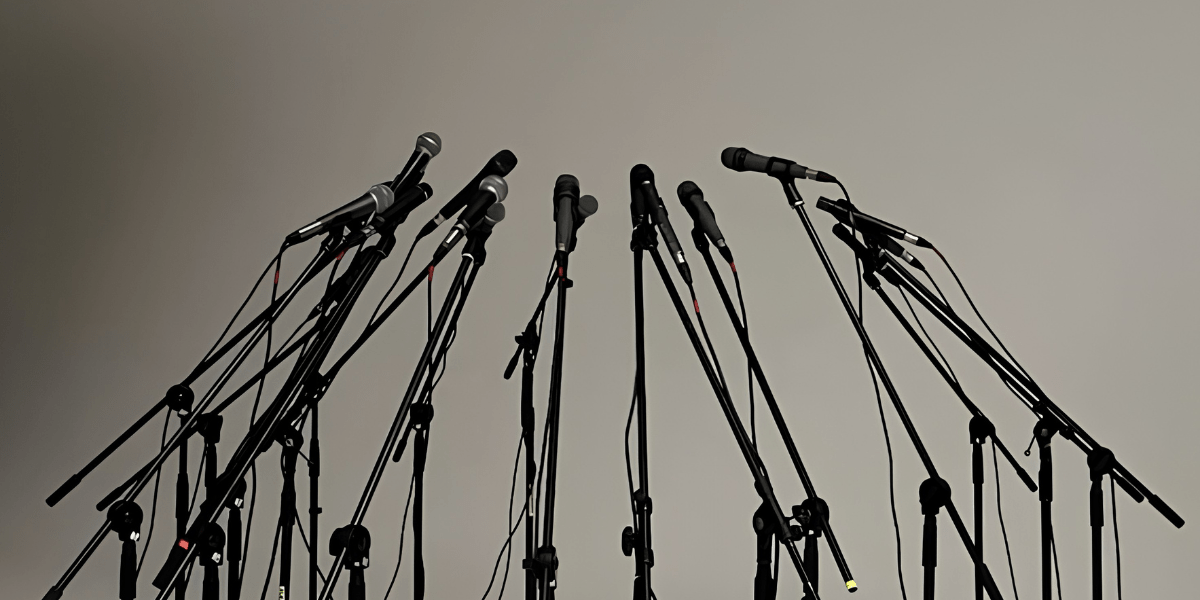
The C-suite has walked out from behind the press office into the open, and it’s talking straight to customers, recruits, investors and the odd critic with barely anyone in between.
Why the trust architecture has changed
None of this happened because executives suddenly fell in love with posting on social media. It happened because the whole architecture of corporate trust underneath the profession has been quietly rebuilt.
Institutional trust has been haemorrhaging from boardrooms for years. The big global trust studies, the ones that survey tens of thousands of people across dozens of countries, now describe a deepening crisis of confidence in leadership, with distrust of business leaders rising and about two-thirds of people saying they don’t trust them.
You’d think that was an argument for executives to keep their heads down. It’s the other way round. In a low-trust world, the faceless institution is the least trusted voice of the lot, and a named, accountable human willing to put their face to a view is about the only credible thing a company has left. Trust didn’t vanish, it moved from the institution to the individual, from the corporate statement to the person willing to stand behind their own words.
The commercial significance, more than a vanity project
Treat executive communications as a nice-to-have, a bit of reputational polish, and you’ll miss what it now does to a pipeline. One major annual study of B2B decision-makers found that 73% trust a company’s thought leadership more than its marketing and product materials when sizing up what it can actually do.
The same research found that nine in ten senior buyers are receptive to a company that regularly publishes strong thought leadership. Three-quarters said a good piece had pushed them to look at something they weren’t even considering. And seven in ten, the figure that should make you sit up, admitted a single piece had at some point made them wonder whether to stick with a supplier they already had.
Read those numbers back, and a CEO’s personal brand stops looking like vanity and starts looking like a way into the market. C-suite personal branding, backed by something real, closes the gap between a company and the people deciding whether to buy from it, work for it, or back it.
It’s one of the few bits of corporate communication that builds reputation, pulls in demand and holds the line against a rival doing the very same thing to you, all at once. Which is how it’s climbed from a line on the marketing plan to a genuine plank of corporate communications strategy.
The authenticity problem
Here’s where it gets tricky, because the minute something works, the industry tries to mass-produce it, and mass production is the one thing this format can’t survive.
The whole value of the executive voice rests on one assumption in the reader’s head: that a real person thinks this.
Break that, and you haven’t built a personal brand; you’ve built a liability. And we’re the ones breaking it, with ghostwritten posts the named executive has never read, never mind written, AI thought leadership squeezed out of a prompt and a stale press release that reads like every other synthetic post in the feed, and the CEO “voice” that’s really a 24-year-old in the comms team doing an impression.
People are getting quicker at spotting all of it, and getting caught costs more than getting away with it ever paid, because it doesn’t just flatten the post in front of them, it makes them wonder whether anything with that executive’s name on it is really theirs.
Authentic communications isn’t a coat of varnish you brush over a ghostwritten draft. It comes from the executive actually being involved: holding the view, signing off on the words because they’re happy to be argued with about them, sounding on the page roughly the way they sound across a meeting-room table. Ghost-writing and editing aren’t the enemy; every busy leader needs both.
The enemy is the distance between the voice on the page and the person it’s meant to belong to, and the wider that gap gets, the more the whole thing wobbles.
The activist CEO problem, what to say and what to leave alone
Then there’s the question every executive communications programme eventually runs into: how much of the world beyond the business should the leader actually weigh in on?
The instinct is to file silence under safe and speaking out under risky. The evidence is less comfortable than that. The same trust research suggests that around eight in ten people think business leaders are justified in wading into a societal issue, but only where the business can genuinely move the needle on it, or is already mixed up in it somehow.
A chief executive speaking on something the company actually touches, its industry, its workforce, its supply chain, its customers, is usually on solid ground. The one who reaches for whatever’s trending because the content calendar says it’s time to “have a view” is wandering somewhere, every option loses someone.
The hard part is that there’s no neutral corner to stand in. In a polarised market, silence on a hot issue still reads as a stance to one crowd while going unnoticed by the other. The skill executives need most isn’t the nerve to speak, it’s the judgment to know which issues are actually theirs and which belong to someone else, plus the backbone to stay quiet on the second sort even when everyone internally is begging them to “say something.”
Crisis communications and the executive voice
All of this eventually runs into the worst day. And most crisis communications playbooks were written for a world that’s already gone.
The old playbook was built on control: a holding statement, approved lines released slowly and deliberately, the press office as the one door through which everything came. It assumed the institution was the voice.
However, if your executives have spent two years building real, personal relationships with the market, the market won’t sit still for the institution hiding behind a statement when it all goes wrong. It’ll want the person whose name and face it’s come to know, it’ll want them fast, and it’ll want them sounding like themselves rather than like the legal team.
That’s a much harder discipline than putting out a corporate line, and you can’t improvise it in the moment of impact. An executive who’s visible and human when things are going well has effectively signed up to be visible and human when they’re going badly, and a comms team that spent all its energy building the personal brand without ever prepping that person to use it under fire has built something that’ll fold at the exact moment it matters. The voice that earns trust on a quiet Tuesday is the one that has to carry the crisis. That work has to happen long before the crisis shows up.
The C-suite has moved into the public realm which is a massive opportunity for businesses and the communications professionals who represent them. The businesses that handle it well will be the ones that treat the executive voice as something to earn and protect rather than fake and spend, because the same shift that hands a leader all that reach has also, to some extent, taken away the press office that used to stand between them and any potential fallout.

About the author
Simarin Tandon | Junior Digital Account Director
Having worked with brands across the Beauty & Wellness, FMCG, FinTech, and Home & Lifestyle sectors, Simarin focuses on driving acquisition and growth, whilst managing the Digital team at brandnation.
A curious marketer, Simarin’s finger is always on the pulse when it comes to performance and digital updates across both paid and organic platforms.