The most powerful brand moments of the past year have not happened on a feed. They have happened in a room.
Across industries, a significant shift is taking place in how brands use influencer partnerships. The focus is moving away from content output and towards something harder to manufacture – genuine community. And increasingly, the brands getting it right are taking their influencer strategies offline.
The data behind the shift
This is not a vague cultural feeling. The numbers are concrete. According to the Influencer Marketing Factory’s 2025 Creators IRL survey of 1,000 social media users, 41% of respondents reported attending at least one in-person influencer event in the past year, and two-thirds of non-attendees said they were open to attending future events. On the supply side, StubHub data shows that creators, podcasters, and authors sold 500% more tickets to IRL events in 2025 compared to the previous year.
At the same time, a 2025 Business of Fashion and McKinsey survey found that 68% of shoppers are frustrated by the volume of sponsored content on social media. The two trends are not unrelated. As digital trust erodes, the appetite for in-person connection is accelerating to fill the gap.
From the Attention Economy to the Connection Economy
To understand why this is happening, you have to look at what has changed culturally, not just commercially. dcdx founder Andrew Roth, whose firm launched a first-of-its-kind agency in 2025 dedicated entirely to connecting brands with IRL communities, frames it in terms of a fundamental economic shift: “Influencer marketing created a movement within the attention economy, helping brands capture attention worldwide. Now, a post-COVID movement centred around human connection has emerged.”
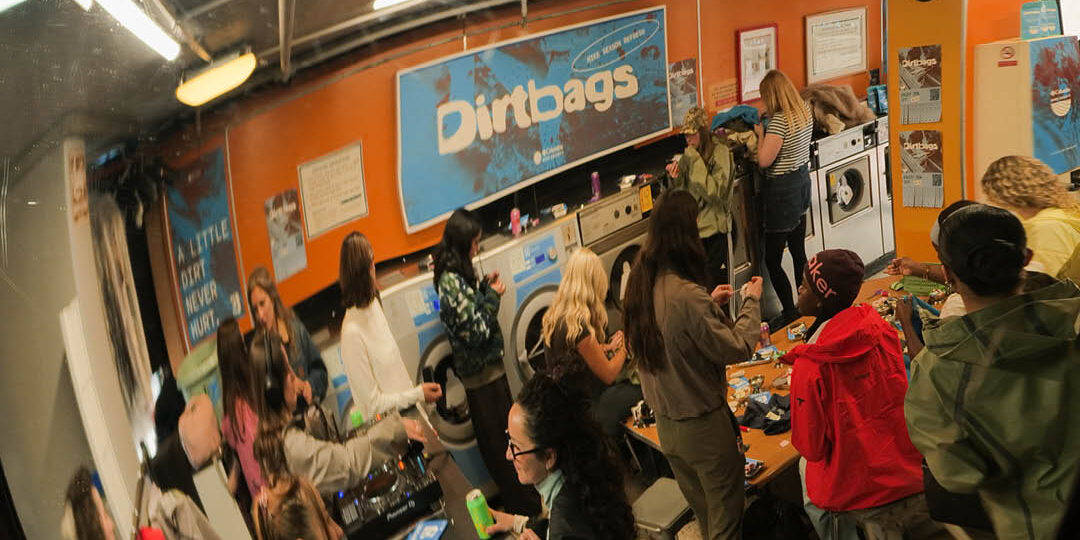
As third spaces declined, new communities formed around shared interests rather than shared places. Run clubs, book clubs, creative collectives, wellness circles are where these interest-driven groups have grown rapidly, and they represent something brands have struggled to manufacture online: genuine belonging. A recent EMARKETER report found that over 84% of Gen Z and Millennials value brands that develop a marketing mix incorporating both technological and physical experiences. The appetite for IRL is not a rejection of digital. It is a demand for balance.
The evolution of the influencer event
It is important to draw a distinction here, because not all influencer events are created equal. The era of the large-scale brand party, the stacked goodie bag, and the attendance fee has not entirely disappeared, but it no longer represents best practice. Consumers can identify events that exist purely as content generation exercises, and increasingly, so can the creators being invited to them.
What has replaced it is more considered, and more effective. The clearest illustration of what the new model looks like is REFY Beauty. Rather than a traditional influencer trip, REFY selected participants for a Mallorca getaway from its Instagram Broadcast Channel community, inviting loyal customers to experience events alongside their favourite creators. The approach generated coverage in Vogue, Business of Fashion, and Cosmopolitan not because of the spend, but because the concept was genuinely new. As co-founder Jenna Meek put it: “REFY has built its reputation as an influencer-led brand, but recently, we’ve seen a shift: our customers have become the new influencers.”
The principle is the same regardless of category. When Brandnation launched MERIT Beauty to a UK and Irish audiences, the starting point was not reach but recognition. The influencer programme was built around a curated selection of tastemakers chosen for the depth of their authority in the clean beauty space, alongside creators whose content carries the texture of real life rather than the polish of production. A carefully assembled group of beauty creator gathered in person around the brand’s “less is more” philosophy, resulting in over 70 pieces of content reaching a combined following of 3.21 million numbers that reflect the quality of the community built around the event, not just its size.
Niche communities and the depth of offline engagement
Today’s most effective creator events are not built for everyone. They are built for exactly the right people. Niche communities are characterised by high engagement, high trust, and a shared sense of identity that passive scrolling cannot replicate and brands that understand this are designing experiences accordingly.
The Bellissima Salon Tours demonstrate precisely what this looks like when executed well. Italian haircare brand Bellissima wanted to build genuine authority in the curl community a highly specific, culturally engaged audience that had long felt underserved by mainstream haircare. The brief was not to generate impressions, it was to own curl, show up with purpose in a space where trust is hard-won.
Brandnation created a community-first experiential campaign that took the brand into curl-specialist salons across London and Manchester, with the campaign now rolling out to three further UK cities. Co-branded salons welcomed members of The Curl Collective Bellissima’s long-term influencer community of curl-conscious creators for one-on-one styling sessions with curl experts, designed to showcase the brand’s Diffon Supreme in a context that felt genuinely educational rather than promotional. A single video from one creator reached over 400,000 views and 40,000 likes. Across the campaign, 95 pieces of content were produced, reaching a combined audience of 1.51 million with 39,000 engagements. The content performed because it was useful. The community responded because it felt seen.
Merrell’s Destination Hackney is a useful illustration of what this looks like in practice. The brief was to launch the Agility Peak 6 trail shoe in a way that meant something to London’s running community. The answer was an unconventional 80km ultra-relay race through UK trails, threading five teams of five through varied terrain before arriving in East London. There was no handed-down strategy, no controlled setting, and no script. As Merrell spokesperson Simon Sweeney described it, the ambition was to “tear up the racing rulebook and do something that felt genuinely alive.” The race itself generated over 300,000 organic social views and 240+ pieces of media coverage, and the evening afterparty at Netil360 extended the event’s cultural reach into London’s wider running, creative and outdoor communities. The content that followed was not manufactured. It was earned.
Harriet Poole, Influencer Account Director at Brandnation, has seen this dynamic play out across both campaigns. “The brands getting the best results from offline community work are the ones treating events as genuine experiences rather than content shoots. When a creator hosts something they actually believe in, and invites people who genuinely want to be there, the quality of everything that follows the conversations, the content, the long-term advocacy is completely different. You cannot manufacture that energy. You have to earn it.”
The content opportunity that lives beyond the room
One of the most underappreciated aspects of influencer-hosted events is what happens after the last guest leaves. The content that performs best from IRL activations tends to be the content no brand could have scripted an unplanned moment, a genuine reaction, a conversation captured on someone’s phone. These are the posts that drive real engagement, because audiences can feel the difference between something that happened and something that was staged.
An omnichannel approach that extends the content lifecycle well beyond the in-person moment is one of the defining characteristics of the activations performing best right now. IRL events generate buzz, content, and conversion all in one place. And because creators bring their communities with them, brands get access to highly engaged audiences without the noise of traditional advertising.
What this means for brands
The brands winning in this space share a common approach: they prioritise depth over reach, they give creators genuine creative freedom, and they build experiences that attendees actually want to talk about. The move from campaign briefs to co-created spaces is the defining shift building environments with creators where the brand adds value, rather than simply buying a presence.
In a landscape where digital trust is harder than ever to earn, that is not just a creative preference. It is a competitive advantage.
Want to build influence beyond the feed?
Brandnation helps brands create culturally relevant IRL experiences that communities actually want to be part of. Get in touch to find out more.
About the author
Simarin Tandon | Junior Digital Account Director
Having worked with brands across the Beauty & Wellness, FMCG, FinTech, and Home & Lifestyle sectors, Simarin focuses on driving acquisition and growth, whilst managing the Digital team at brandnation.
A curious marketer, Simarin’s finger is always on the pulse when it comes to performance and digital updates across both paid and organic platforms.